
Filière du rotin, son importance et les dynamiques de subsistance en milieu rural du Cameroun : cas du département de la Mémé, Région du Sud-Ouest
Adolf Metta Bekumba, Josephine Akenji Maghah, William Shu Neba, Jude N. Kimengsi
Abstract: Increasing complexity brought about by the global population increase exacerbates the current strain on resources. Rattan is still widely supplied for this purpose and is one of the notable non-timber forest products. However, little is known about the rattan value chain and how it affects sustainable livelihood, especially in the Meme Division of the Southwest Region of Cameroon. The purpose of this article is to determine the function of rattan and its implications for sustainable lives in Southwest Cameroon’s Meme Division. This research uses a mix method approach (quantitative and qualitative). Using semi-structured questionnaires, 323 households from each of the five Subdivisions that make up the Meme Division were surveyed, along with field observations, interviews, focus groups, and document reviews. The SPSS 2020 version was utilized to analyze the data using descriptive statistics. The findings show that harvesters and collectors make up the largest group (about 51.4%) of participants in the rattan value chain. Farmers (accounting for about 55%) make up the most diverse group of actors in rattan production, as a livelihood diversification approach of all participants. In the transformation of rattan (more than 46.3% of the actors are basket weavers, furniture makers, designers, and craftsmen). There have also been notable shifts in the manner of the production and transformation of rattan, supporting livelihoods. Actors can now claim approximately 615,000 FCFA, a considerable 410,000 FCFA difference from their previous anticipated average wage of 205,000 FCFA. The study concludes that actors should be encouraged to form longer-lasting relationships to improve the condition of their social capital.
Keywords: Diversification; rattan products; value chain; actors; income
Résumé : L’accroissement de la population mondiale et sa complexité poussent à la hausse la demande en ressources naturelles comme le rotin. Toutefois, il existe peu d’informations sur la chaîne de production, de distribution et la valeur économique de ce produit forestiers non ligneux. Cette absence d’informations se signale surtout dans le département de la Mémé situé dans la Région administrative du Sud-Ouest au Cameroun. Le but de cet article est de déterminer la fonction du rotin et ses implications dans le développement durable du département de la Mémé, Sud-Ouest du Cameroun. La recherche utilise l’approche mixte (quantitative et qualitative). Un questionnaire semi-dirigé a été administré à 323 ménages dans chacune des cinq sous-préfectures qui composent le département de la Mémé. Les chercheurs ont procédé à la revue de documents écrits. Les observations de terrain, des entretiens avec des groupes de discussion ont également été organisées. La version 2020 du logiciel SPSS a été utilisée à des fins d’analyse des données statistiques. Les résultats montrent que les récolteurs et collecteurs constituent le groupe le plus important de la chaîne du rotin soit 51,4 %. Les agriculteurs constituent 55% de la chaîne de production du rotin qui leur garantit un revenu d’appoint. Les artisans du rotin (vanniers, fabricants de meubles) représentent 46,3 % de cette même chaîne. Des changements notables ont été relevés dans la manière de produire et de transformer le rotin qui occupe une place importante dans les moyens de subsistance. Grâce à ces changements, les acteurs anticipent un revenu de l’ordre de 615 000 FCFA. Il existe une différence considérable de 410 000 FCFA entre le revenu d’avant les changements et le revenu moyen anticipé de 205 000 FCFA. L’étude conclut qu’il faudrait encourager les liens plus solides entre les maillons de la filière du rotin afin d’améliorer son capital social.
Mots clés: Diversification; produits en rotin; chaîne de valeur; acteurs; revenu
Plan
Introduction
Study Area
Research Methodology
Results
Discussion
Conclusion
Full Text Format PDF
Introduction
The collection, transformation and or processing of NTFPs notably rattan has over the years been attributed to be a function of interest and motivation of actors. Economic, social, cultural interest have been identified to shape actors’ interest and motivation (Belcher et al. 2018; Wong, 2009; Siregar et al. 2017). This interest and motivation are however faced with an alternation in participation rates. Recent studies have indicated a massive exclusion of actors especially in decision making processes (Wicaksono et al., 2018). This exclusion can lead to conflicts over land rights, limited access to markets, and unequal distribution of benefits from rattan trade (Sunderland et al., 2014).
At its most basic, a resource is anything-natural or man-made-a person uses to support themselves, claims Shiva (2018). Natural resources such as forests are important because they provide food, fuel, and access to both timber and non-timber commodities for the local forest communities (Derebe et al., 2023). Tropical forests are believed to be home to about half of all terrestrial animal and plant species on Earth (Gibbs, 2018). According to World Bank estimates, 700 million people, or 8.5% of the world’s population, earn less than $2.15 a day (World Bank, 2024), the extreme poverty threshold that applies to low-income countries. In unstable, war-torn nations in Sub-Saharan Africa, two-thirds of the world’s population lives in extreme poverty (Corral et al., 2020; Khan et al., 2020). Forest resources (including NTFPs) are essential to the livelihoods and subsistence needs of an estimated 1.6 billion people worldwide, including small-scale farmers, indigenous communities, and households that rely on forests for food, fuel, medicine, and other necessities (FAO, 2020; Shackleton & de Vos, 2022). Irvingia gabonensis, Trichoscypha acuminata, Alstonia boonei, Garcinia kola, Piper guineense, Picralima nitida, and Ricinodendron heudelotii are a few of the NTFPs, along with rattan (Caspa et al., 2020).
Rattan belongs to the Calamoideae subfamily of the Arecaceae family (Kurian et al., 2020). Rattan is a thorny climbing or trailing palm that is only found in the Old World and has roughly 600 species (Sunderland, 2001). Its range is restricted to equatorial Africa, where four genera, including three endemic species, are found, and tropical and subtropical Asia and the Pacific (Kurian et al., 2018), where eleven of the three known species are endemic (Sunderland, 2001). In Africa’s lowland tropical forest zone, climbing palms, sometimes referred to as rattans, are a vital part of many rural residents’ lives and the cornerstone of a thriving cottage economy (Nfornkah et al., 2022). Because of its strength, versatility, and pliability, it is widely used in many industries beyond merely making baskets, furniture, household products, and even bridges (Mateko-Odikro Mate, 2021; Widess & Miller, 2024). Around 700 million people use or trade rattan worldwide, according to estimates (Jaisankar et al., 2017). In many villages, particularly in the Meme Division in the Southwest Region of Cameroon, rattan is the most plentiful non-timber forest product that can be used in place of wood for furniture and other products (Wahab et al., 2019). It was among the most important NTFPs traded internationally years ago (Meijaard et al., 2014). Meijaard et al. (2014) estimate that between 70,000 and 90,000 tonnes of raw and semi-processed rattan are traded globally each year, with a market value ranging from USD 50 million to USD 65 million.
Cameroon is one of Africa’s leading producers of rattan, with an estimated 10,000 to 15,000 tonnes produced annually (Nfornkah et al., 2021). There are several rattan species across the country, including species of Calamus, Laccosperma, Eremospatha, and Korthalsia (Nfornkah et al., 2021). The most frequently obtained species are Laccosperma and Calamus (Nfornkah et al., 2021). Accordingly, rattan is considered an “open access” resource throughout its range, and it is unknown how it is managed in Africa (Mofor et al., 2020). There are few or no customary rules governing the harvesting of rattan from the wild, which permits unsustainable management techniques. Therefore, if rattan is to continue to be a natural resource and a sustainable source of income, research into conservation-supportive policies, marketing, and prospects is crucial. Rattan, which is easily accessible, especially in the south and east of the country, is a substantial source of income for many Cameroonian rural residents (Endamana et al., 2019; Nfornkah et al., 2022).
However, the Cameroonian rattan industry has a few challenges, such as insufficient value chain governance and unsustainable harvesting practices. Rattan populations are declining because of extensive harvesting, habitat degradation, and inadequate regeneration; therefore, there is an urgent need to maintain the current rattan resources (Joshi et al., 2017). Decision No. 0209/D/MINFOF/CAB of April 26, 2019, which guarantees sustainable livelihoods and good governance in the rattan production and transformation process, classifies non-timber forest products (NTFPs) and special forest products. Rattan is classified as a moderately threatened forest resource under category B (Nfornkah, 2022). Rattan harvesting can take three to four years, according to Gonmadje et al. (2018), and collectors usually collect ten to fifteen stems each month for a price per bundle that starts at $3.54 in rural regions. Though not all agroecological zones (AEZs) have seen them, Cameroon has seen a lot of research on rattan distribution, variation, biophysics, and value chains (Nfornkah, 2021; 2022; Nzengue et al., 2023; Mama et al., 2024). The Meme Division in Southwest Cameroon is one of the areas in Cameroon where rattan farming is a significant economic activity.
There is currently little research on Cameroon’s rattan value chain and how it affects livelihoods, especially in Meme Division. The present study was motivated by the fact that, despite the existence of research on the role of rattan in livelihoods, the value chain dimension of these studies has received very little attention. Therefore, this article aims to ascertain the role of rattan and its consequences for sustainable lifestyles in the Meme Division, Southwest Cameroon.
Study Area
Meme Division is one of six divisions that make up Cameroon’s southwest (Ndah et al., 2023). The Division lies between latitudes 4°N and 6°N of the Equator and longitudes 9°E and 10°E, east of the Greenwich Meridian (Chenaa et al., 2018). It is bordered to the west and south by the Ndian and Fako Divisions (Frederick et al., 2023), and to the north and east by the Kupe Muanenguba and Littoral Region, respectively (Ndah et al., 2023) (Figure 2). An estimated 403,000 people were living in the Division (Epule & Bryant, 2016). This division is made up of five subdivisions: Kumba I, II, and III (mainly urban) and Mbonge and Konye (primarily rural) (Mbella & Fonjong, 2018). Meme Division has two distinct seasons: the rainy season, which lasts for about eight to nine months (March to October), and the dry season, which lasts for about three to four months (October to March) under the hot, humid equatorial climate zone (Akoachere & YM, 2017; Frederick et al., 2023). The maritime Cameroon climate is the specific name given to this climate. With high temperatures of about 27°C and low temperatures of about 4°C, the annual rainfall ranges from 2298 mm to 3400 mm due to strong clouds that block off radiation (Kimengsi et al., 2013). Here, the relative humidity is at least 85% (Kimengsi et al., 2013). These two different seasons account for the growth of NTFPs, especially rattan, which is known to thrive in these rainfall and temperature conditions.
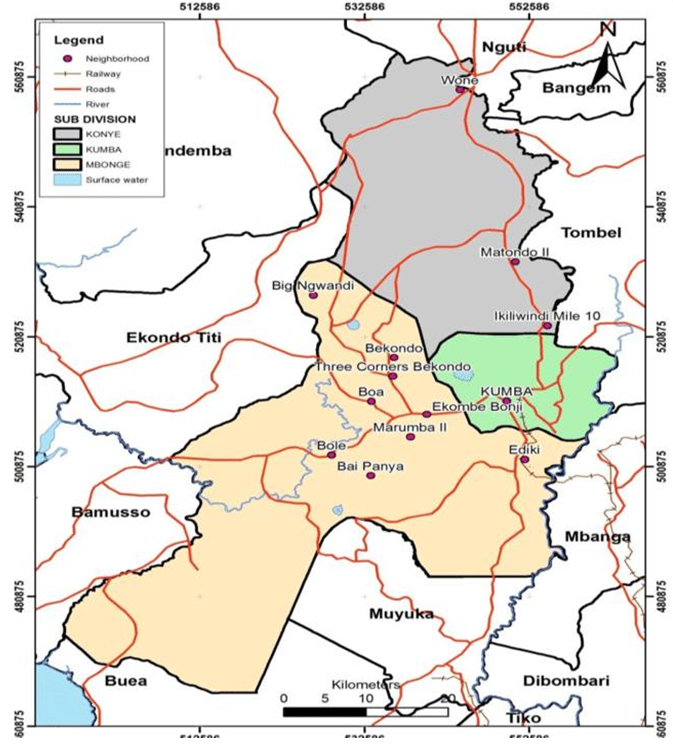
Rural Areas Source: Adopted from Fonjong (2018)
Figure 1: Meme Division Showing Kumba and Its Surrounding
Research Methodology
The research population included the estimated 403,000 residents of the Meme Division’s five subdivisions (Kimengsi et al., 2013). The target demographic includes a wide range of stakeholders involved in the production, processing, and marketing of rattan products. The following subdivisions are impacted by rattan on a seasonal and annual basis, as are the stakeholders responsible for managing the value chain in the various subdivisions: Mbonge, Konye, Kumba I, Kumba II, and Kumba III. Depending on the village’s population, as shown above, households in the 15 villages chosen by the simple random sampling technique were given well-structured questionnaires. The formula Nq =, where Nq is the number of questionnaires to be distributed, Pv is the population of each village, Tp is the total population of the chosen villages to be sampled, and Ss is the sample size, is used to infer this. These surveys include both closed-ended and open-ended questions to gather quantitative and qualitative information that is consistent with our research objectives and goals. Demographic information and the rattan value chain’s contributions to livelihood were gathered. The data came from observations and field surveys conducted across the Meme Division. This was done with digital cameras and smartphones. Digital cameras were used to take and print pictures of the harvesting, processing, and final products of rattan, such as chairs, baskets, and other items. Interviews were fairly dispersed among various actors, including harvesters, traders, and consumers of rattan products, to see how rattan impacted their livelihoods. To gather qualitative information, focus groups with harvesters, processors, and traders of both sexes were also arranged. A qualitative research approach involves gathering a small group of people, usually six to ten, to talk about a specific topic of interest that has an immediate impact on their well-being (Frost, 2021). This approach was used in all the villages that were visited for this study. This made it possible for the researcher to examine the attitudes, beliefs, behaviors, and perceptions of participants on the rattan value chain and the effects on livelihood to produce a comprehensive understanding and insight scenario.
Overall, there were approximately 11,759 residents in the communities that were sampled. This includes traders, small-scale rattan producers, government agencies, non-governmental organizations, and other players in the rattan value chain. By focusing on this broad and varied target population, the study aims to shed light on how the rattan value chain impacts the sustainability and financial well-being of those who are directly impacted. Taro Yamane’s (1967) method was one of several methods used to determine the study’s target population. In 1959, the target population was substituted to calculate the sample size using the method proposed by Taro Yamane.
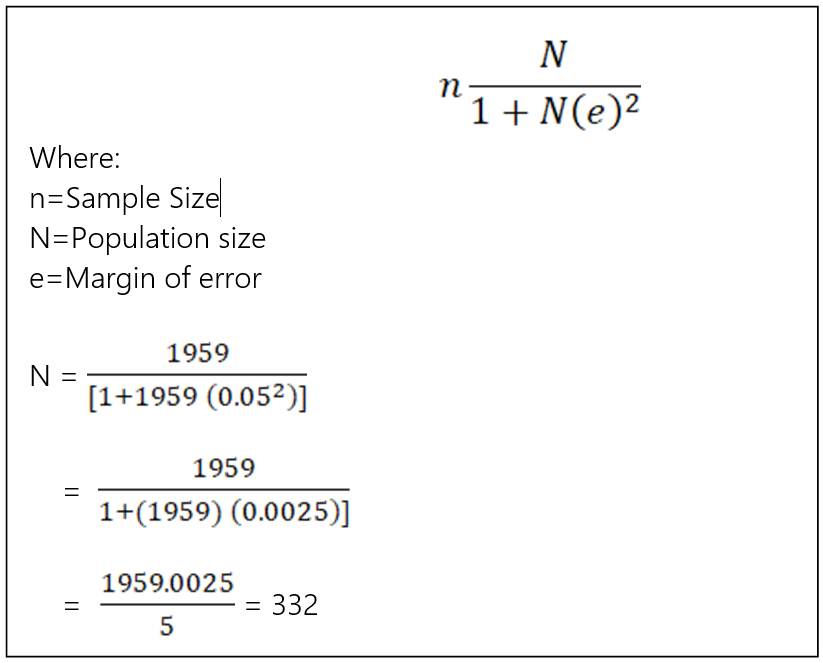
This sampling approach gives the minimum number of people to collect data from the sample population to guarantee the validity of the study. According to Yamane (1967), the sample size that is obtained may be further reduced by financial expenditures and other research-related constraints. Simple random sampling, which creates a subset of a statistical population with an equal chance of selection for each member, was used in the study. Because it is objective and targets a large population where the problem affects everyone being studied, this methodology is suitable for our study. Consequently, every household will likely receive a questionnaire. Fifteen villages in the Division were selected based on population to receive questionnaires: Ikiliwindi, Baduma, Mbakwa Supe, Mbu, Mosanja, Diongo, Mofako Butu, Big Butu, Matoh Butu, Mbalangi, Ediki, Banga Bakundu, Bombe Bakundu, Mundame, and Mambanda. For ease of understanding, these communities were categorised into four groups: Meme North, South, East, and West. A representative sample of 332 participants for the quantitative data was obtained by randomly selecting 83 families engaged in the production and transformation of rattan from each of these four groups.
Data collection and processing
The research basically used nominal data and included demographic and population data as well as ordinal data: socio-economic data. This data is directly linked with the variables to be studied. The data was derived through two major sources. Primary (questionnaire, focused group discussions, interviews and field surveys), and secondary sources. The data collected through the different methods was edited, coded, analyzed and summarized for interpretation.
Data Analysis
Data was analyzed descriptively and inferentially using SPSS 2020 version, which also produced statistical tables and cross-tabulation bar charts. Statistical data were further analyzed and presented as frequency and percentage charts using Microsoft Excel version 13. The data was presented using tables and graphics. Decoding the information gathered from focused interviews and group discussions allowed for the presentation of the results, which included parallels and differences. This allowed for a proper understanding of the topic under study. Cartographic consideration is the process of analyzing and comprehending geographic data using maps. Stated differently, it uses geographic data visualization to identify patterns, correlations, and trends within a given region. The spatial distribution of resources, infrastructure, population, and other aspects that affect livelihoods is better understood by scholars, policymakers, and practitioners thanks to this approach. This study included socioeconomics, value chain, land use, and resource distribution maps. These maps were made using digital cameras and GIS programs on ArcGIS and ArcView.
Results
Contribution of Rattan Production and Trans-formation to Livelihoods
Rattan, regardless of its classification, is essential to enhancing sustainable lives. Because of its cultivation, harvesting, and transformation into high-value products, rattan provides a living for many people, particularly in rural areas where there are few other employment opportunities. This research starts by looking at the production and processing of rattan as a method of sustainable living in the Meme Division.
Actors Involved in Rattan Production as a Livelihood Strategy in the Meme Division
With nearly 51.4% of the total, harvesters and collectors are the largest group of players in the rattan manufacturing value chain, according to Figure 2. The main reason for this figure is that rattans are readily available in the wild in many places, particularly those with dense forest cover. The processors are the second group in terms of numbers. Despite making up only 31.1% of the manufacturing participants, processors were at the centre of the value chain. Third-place finishers were transporters (15%), retailers (4%), and cultivators (0%). Because rattan is known to grow naturally in the wild forests that surround settlements, actors don’t seem interested in farming it, which is one of the main reasons why there aren’t many rattan farmers in the Meme Division. Thus, agriculture was listed as 0% in the rattan value chain. For a few actors, the Meme Division’s rattan production provides a steady source of money and a living.
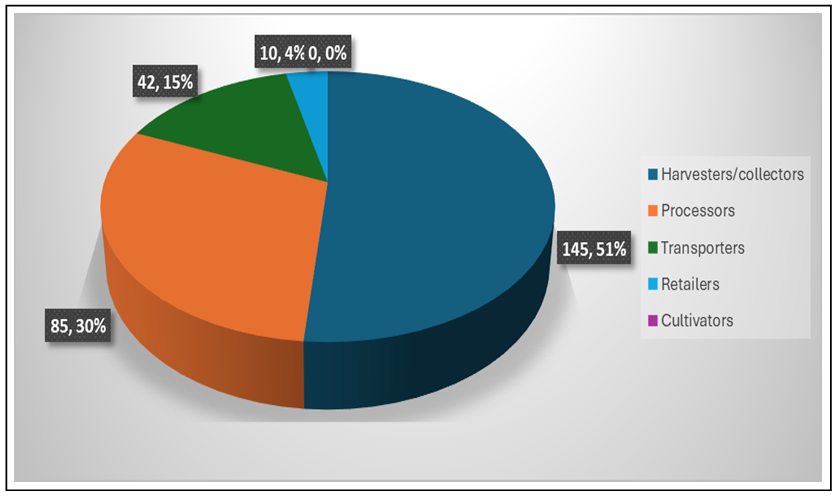
Source: Fieldwork (2024)
Figure 2: Rattan Production as a Livelihood Strategy
Estimated Mean Monthly Revenue Earned from Rattan Production as a Livelihood Strategy
According to Table 1, the monthly rates paid to processors are significantly greater than those paid to any other group involved in the rattan production process. The little value addition on rattan raw materials, such as sorting, cleaning, and drying, is the reason for the relatively high monthly average income of about 75,000 FCFA. As a result, shops and artisans may simply obtain them. This value added justifies the higher monthly compensation. It was also discovered that almost all processors are artists that transform these simple components into intricate shapes. As a result, their chances of making more money are increased. In terms of production, retailers are the second highest earners in the value chain. Even though there are very few, they are very happy with their average monthly income of about 55,000 FCFA. Since there is little to no competition among them, they gain from their small number. Despite being highly represented in the value chain (43.7%), harvesters and collectors seem to earn less than the first two groups of actors. Their low earnings stem from a lack of value because most of them collect and sell rattan directly, albeit with a change in their original shape or form. resulting in a monthly income of about 35,500 FCFA.
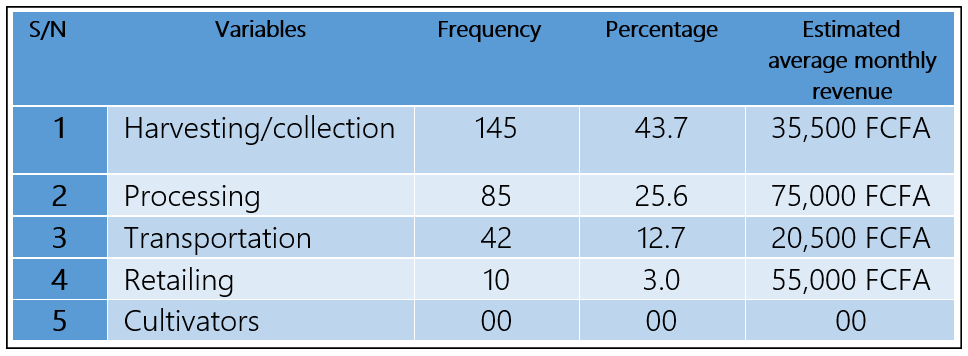
Table 1: Estimated Mean Monthly Revenue Earned by Actors Involved as a Livelihood Strategy
Rattan Transformation as a Livelihood Strategy for Actors
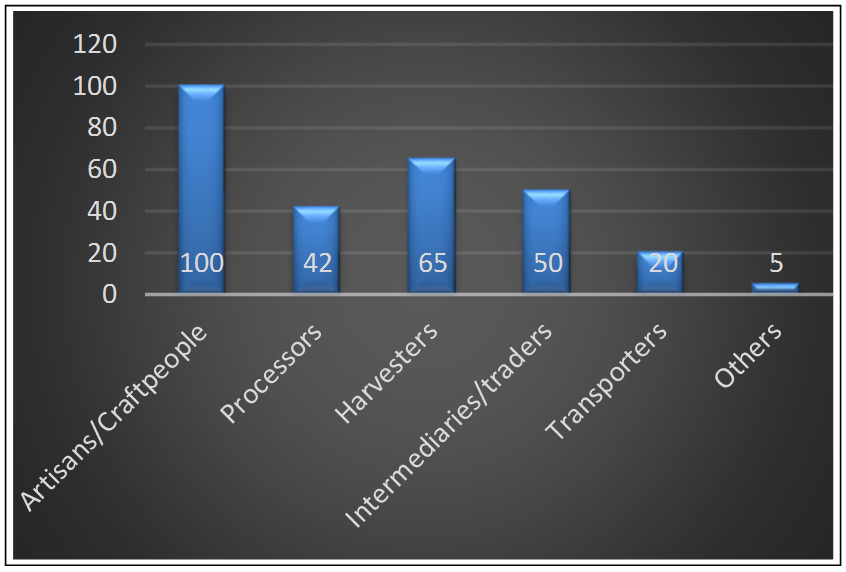
Rattan transformation, which offers a unique blend of traditional skills and economic possibilities, has emerged as a crucial sustainable livelihood solution in many tropical regions, especially the Meme Division. As they are transformed into furniture, baskets, and decorative items, the flexible stems not only take on a variety of shapes but also alter the economic landscape of rural communities. According to Figure 3, rattan transformation is a significant source of income for crafters and artists, accounting for 100 (30.1%), followed by harvesters, with 65 (19.6%). There were five (1.5%) others, fifty (15.1%) intermediaries/traders, forty-two (12.7%) processors, and twenty (6.0%) transporters.
Source: Fieldwork (2024)
Figure 3: Rattan Transformation as a Livelihood Strategy
Estimated Monthly Income of Actors Involved in Rattan Transformation as a Livelihood Strategy
According to Table 2, artists and craftspeople make up the largest group of actors who still employ rattan transformation as a means of survival, FCFA 225000 (30.1%). Weavers, furniture makers, basket makers, and designers are among these performers. This suggests that because they control the prices for the different items produced, this group of people benefits the value chain the most. Harvesters make up about 35,000 FCFA (19.6%) of the value chain. Traders or intermediary actors accounted for 60000 FCFA (15.1%). On the other hand, 12.7% of processors were discovered. Transporters accounted for 13,000 FCFA (1.5%) and 20,000 FCFA (6.0%) for other value chain participants, including governmental officials and social groups. This is because they are not particularly conspicuous in the field. According to the qualitative data, “government officials (forest guards, gendarmes, etc.) experience the least benefits in the rattan value chain” (Male Processor from Ikiliwindi, December 23rd, 2023). Separatist militants’ constraints on government officials since the start of the Anglophone crisis may be the reason for the under-representation of these actors in the rattan value chain.
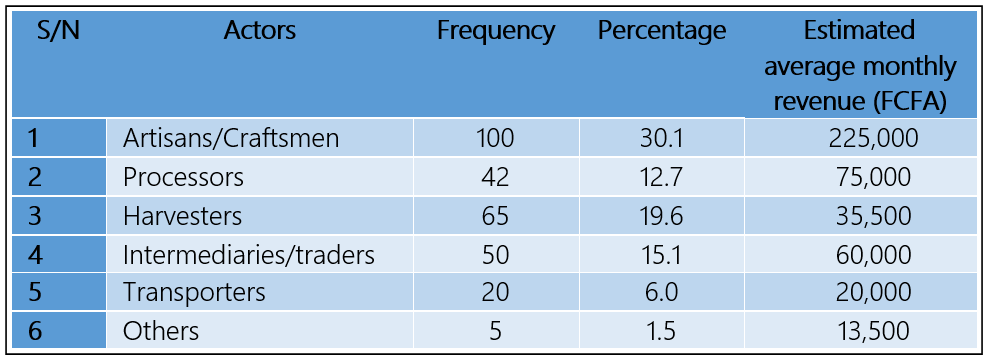
Table 2: Estimated Monthly Income of Actors Involved in Rattan Transformation as a Livelihood Strategy
Rattan Production as a Livelihood Diversification Strategy
Table 3 shows that almost 55% of all participants are farmers, making them the most diverse group of actors. The development of food and cash crops is their main priority. This is immediately followed by the off-season harvest of wild rattan. Farmers see rattan production as an alternative source of income, especially when farming is slow during the dry season. This minimizes the probability of crop failures. Twenty-three percent of fishermen and hunters reported varying their activities. Here, their main activities are hunting and fishing. They revealed that they are engaged in this activity because of the benefits of generating temporary money. It was shown that 4% of traders included the manufacture of rattan in their routine trading activities, which involve buying and selling a variety of goods, especially necessities like rice, salt, and other necessities that are extensively needed in rural areas. Purchasing unprocessed or partially processed rattan from harvesters or selling rattan to processors or end users are two ways to illustrate this. According to this group of performers, their variation is driven by the changing nature of their job with the seasons. Rattan production has become a vital livelihood diversification strategy in villages next to forests, especially those in the Meme Division, giving households and people additional sources of income outside of their primary economic endeavours. According to a local trader, the diversification of non-timber forest products has an impact on human development.
“I buy and sell plantains, cocoyam, bush mango, baskets, etc. I do not have a steady line of business; I follow market trends and demand for each product…The earnings are also dynamic based on the demand and prices of the various products” (Female Traders, Banga Bakundu, January 11th, 2024). This increases market connections as well as provides us with the potential for higher profit margins (Female Traders, Banga Bakundu, January 11th, 2024).
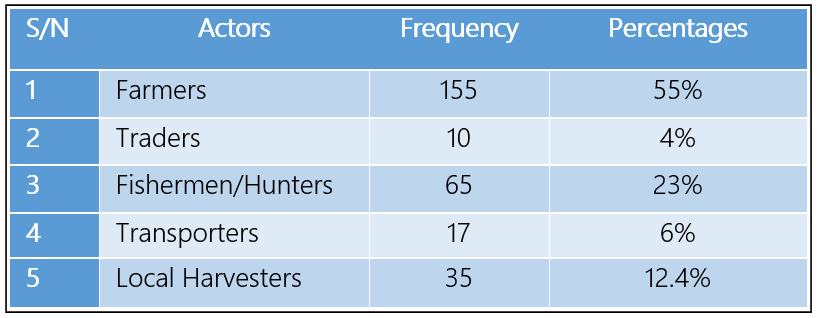
Table 3: Rattan Production as a Livelihood Diversification Strategy
Rattan Transformation as a Livelihood Diversification Strategy
Basket weavers, furniture makers, designers, and craftspeople make up (over 46.3%) of the actors involved in the transformation of rattan, as Table 4 illustrates. Based on field studies, agriculture is the most lucrative occupation they do. It was discovered that (43.3%) of this group had expanded their manufacturing line into a variety of products, especially in response to actions and market and demand trends that went beyond rattan transformation. Therefore, weaving and crafts are only practised during times of low agricultural yield. It was discovered that around 3% of the performers in this group were undiversified, indicating their commitment to either handicrafts or furniture-making. In Banga Bakundu, evidence gathered from a focus group discussion indicates that “I concentrate on making pet beds, chairs, and cages because this is more beneficial than making baskets, which have a low-price range” (Artisan, January 11th, 2024). Approximately 32% of farmers were found to be involved in rattan transformation. Despite their primary focus on agriculture, they also produce basic rattan products like baskets and mats during the off-season, as well as rattan-based agricultural tools like trellises and cages. Around 15.2% of the respondents were processors who oversaw turning raw materials into forms that could be used and who were skilled in drying and fumigating raw materials. Of this group, 14.5% have expanded into producing other items, whilst 0.7% constantly process a single product. In the Meme Division, rattan transformation has developed into a dynamic approach to livelihood diversification, offering locals innovative ways to boost their economic resilience and add to the value of forest resources. As people search for techniques to secure themselves against seasonal variations and economic uncertainties, the transformation of raw rattan into a range of goods, including furniture, crafts, and utility items, presents an attractive potential for skill development and revenue production.
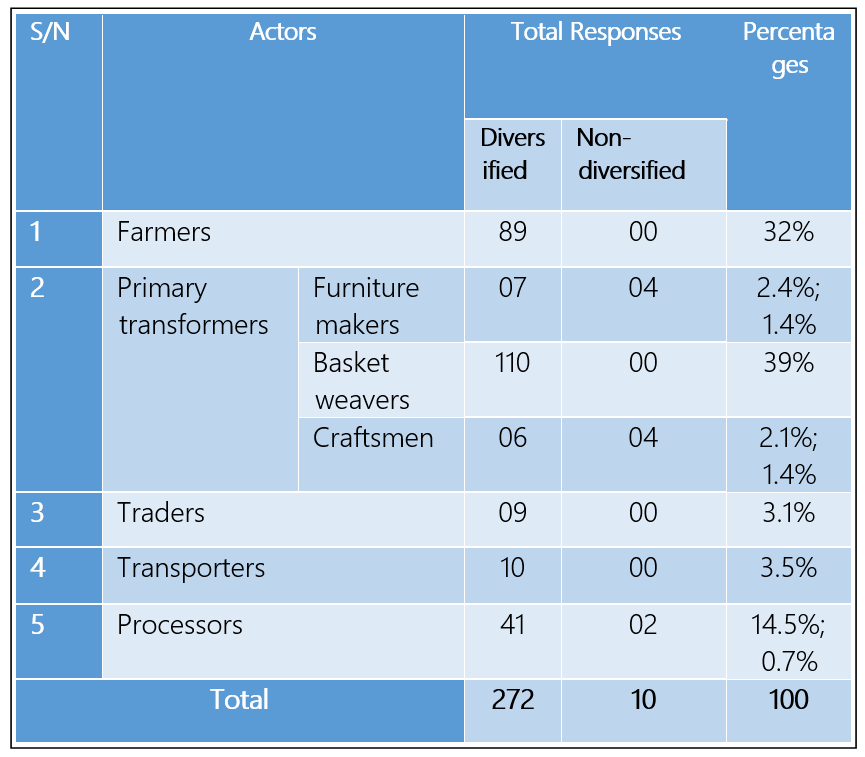
Table 4: Rattan Transformation as A Livelihood Diversification Strategy
Contribution of Rattan Production and Transformation to Livelihoods
The value of rattans to subsistence is investigated in this study, including changes in social, financial, and natural capital throughout time.
Changes in Social Capital
The number of social groups that actors participating in the production and transformation of rattan are linked with, both historically and currently, was examined to quantify the changes in social capital.
Number of Social Groups in the Past
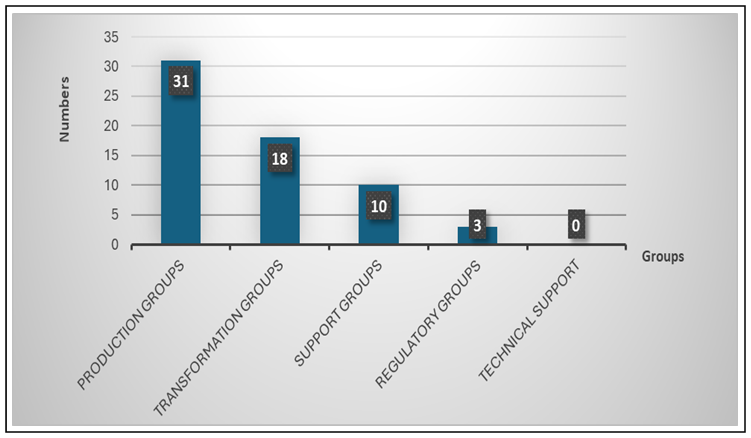
As seen in Figure 4, production groups were the most numerous to have existed in the past. There had previously been groups made up entirely of seasonal collectors, native rattan harvesters, etc., according to more than 31 respondents. This allowed for an over-reliance on community resources on a daily, weekly, or monthly basis, as harvesters, for instance, might easily collect five to ten bundles of cane from a single spot. The responders indicated eighteen (18) transition groups, with the most common being basket weavers and furniture producers. According to reports, there were ten (10) support groups in this area, including traders/middlemen, market sellers, and transporters. It was discovered that three (3) regulatory organizations, including municipal authorities, traditional leaders, and representatives of the forest administration, had previously been on the property. According to respondents during field investigations, there have never been any technical assistance organizations in this area before, such as NGOs or skills development institutes, among others. As seen in Figure 4, production groups were the most numerous to have existed in the past. There had previously been groups made up entirely of seasonal collectors, native rattan harvesters, etc., according to more than 31 respondents. This allowed for an over-reliance on community resources on a daily, weekly, or monthly basis, as harvesters, for instance, might easily collect five to ten bundles of cane from a single spot. The respondents cited 18 transition groups, with the most common being basket weavers and furniture producers. According to reports, there were ten (10) support groups in this area, including traders/middlemen, market sellers, and transporters. It was discovered that three (3) regulatory organizations, including municipal authorities, traditional leaders, and representatives of the forest administration, had previously been on the property. According to respondents during field investigations, there has never been a technical support group in this area, such as NGOs or skills development centers, among others.
Source: Fieldwork (2024)
Figure 4: Number of Social Groups in the Past
Present State of the Social Capital in the Meme Division
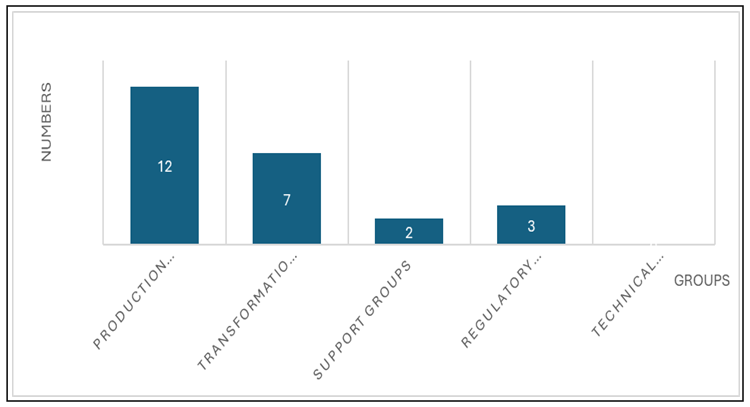
The situation now appears to be very different from what it was in the past. The results show that social capital has altered dramatically across a variety of support networks and groups. Figure 5 illustrates the twelve (12) groupings that were discovered to exist in the sampled areas. These groups include forest-dependent populations, seasonal collectors spread over different areas like Mosanja, Ikiliwindi, Big Butu, etc., and indigenous rattan harvesters. Seven (7) groups of transformers, including basket weavers, furniture manufacturers, and small-scale processors, were also discovered in places like Matoh, Ikiliwindi, Banga, and others. With an emphasis on carriers who oversee the transportation of rattan goods to different locations, especially the market, two (2) support groups were identified. Three (3) regulatory organizations, which are also made up of local authorities, traditional leaders/chiefs, and forest administration personnel (forest guards, gendarmes, etc.), were established to control the exploitation of rattan items. It is clear from the two examples that social capital has drastically changed. One of the most detrimental consequences of this shift, which is mostly caused by urbanization, modernization, cultural dispersion, and changes in land use patterns (agricultural land replacing the natural forest cover, which is rattan), is a reduction in the number of distinct social groups. With the introduction of modern dwellings and furnishings, rattan’s use as a building material and furniture tool has declined. Actors’ participation in the creation and transformation of rattan has deteriorated as a result. Furthermore, because rattan was necessary in many Meme Division communities, cultural transmission has exacerbated the disappearance of indigenous customs. Consequently, the number of entities involved in the production and transformation of rattan has decreased.
Source: Fieldwork (2024)
Figure 5: Number of Social Groups Today
Changes in Natural Capital
One of the key variables influencing the local rattan value chain in the Meme Division is the transformation of natural capital brought about by deforestation and altered land-use patterns. The availability and quality of wild rattan resources vary greatly as the Division’s rich forest ecosystems face increasing pressures from wood exploitation and agricultural growth, which have significant repercussions across the industry. To capture natural capital, the situation and the extent of change over the past decade were analyzed.
Change in the last decade
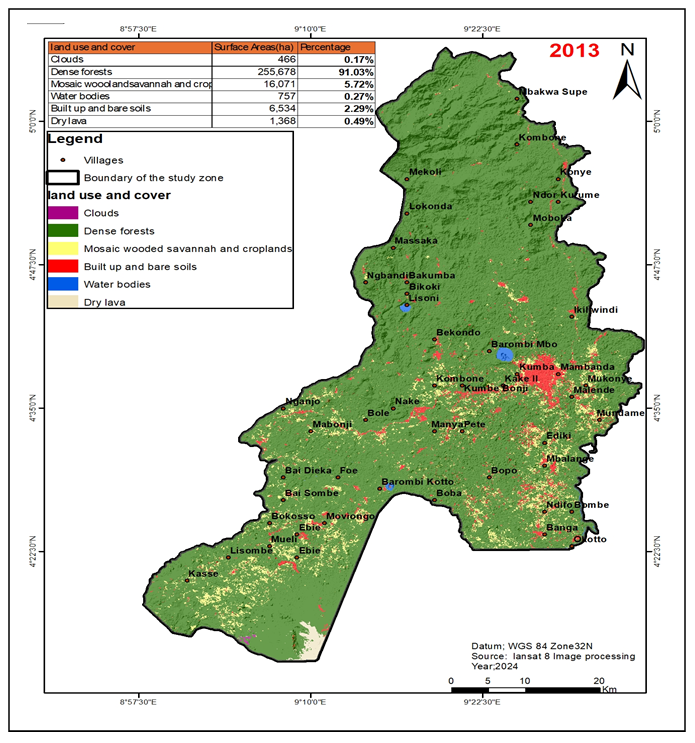
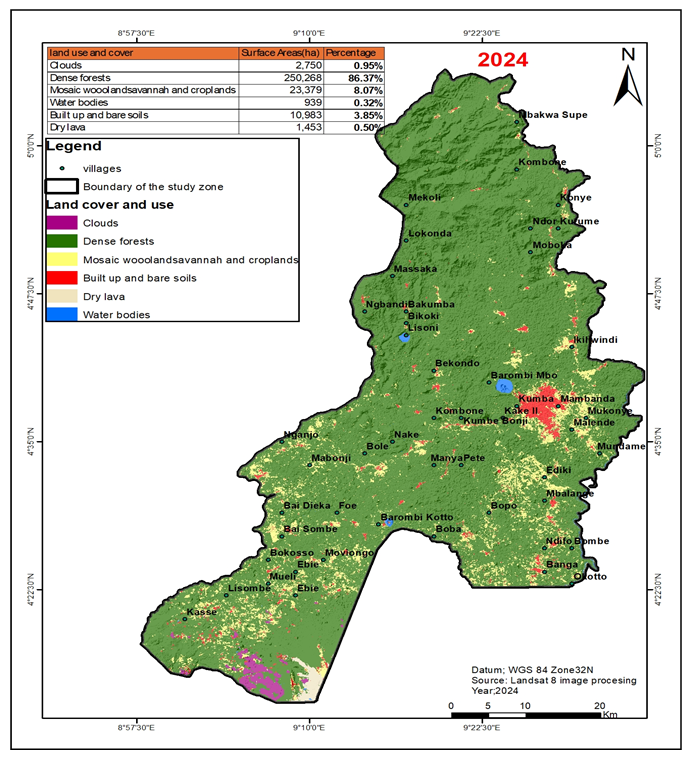
Figures 6 and 7 show how the natural capital has changed, especially the surface area covered by forests. Ten years ago, thick forest covered about 255,678 hectares of land. recording an overall percentage of 91.03%. There is now 250,266 hectares of forest cover on the surface, which is an 86.37% drop. This leads to a total percentage change of 4.66% and the loss of 5,412 hectares of surface area. However, this loss is happening gradually because of the high rate of migration out of the area brought on by the ongoing violence.
Change in Financial Capital
Table 5 shows a significant change in the actors’ financial status in the Meme Division. Compared to their projected average salary of 205,000 FCFA in the past, actors can now claim about 615,000 FCFA, a significant 410,000 FCFA difference. As a result, the percentage changes by 33.3%. The significant increase in the average salary of today has created more favourable circumstances for a stronger propensity to save. This has led to an increase in average savings from 51,250 in the past to approximately 153,750 in the present. As a result, the proportion changes by 33.3%. This increase in average revenue and savings can be attributed to value addition, product diversification, and general price hikes for goods and services. For instance, a basket used to normally cost about 1,500 FCFA, but these days it costs about 5,000 FCFA. Previously, however, a set of chairs would have cost between 25,000 and 50,000 FCFA. These days, the same seats cost at least 150,000 to 200,000 FCFA. Most of the performers revealed this, especially the artisans and weavers.
Discussion
Harvesters/collectors, who make up around 51.4% of the sample, are the highest type of players in the value chain of rattan production, according to the findings on actors engaged in rattan production as a livelihood strategy in the Meme Division. The results of this study are like those of a study by Harbi et al. (2018) on bridging the gap between livelihoods and forest conservation: Lessons from the utilization of non-timber forest products in South Sumatera, Indonesia. According to their results, collectors, local brokers, big collectors, small processors, big processors, retailers, and end users are all actors along the value chain. Every link in the value chain generates a profit margin of about 25% (Harbi et al., 2018). In an environment where protected area laws and regulations are challenging to implement, this study promotes rattan harvesting and production as a low-intensity, non-deleterious forest use that can simultaneously improve local livelihoods and forest conservation (Harbi et al., 2018).
Source: Landsat 8 image processing (2024)
Figure 6: Land Cover Situation of 2013
Source: Landsat 8 Image Processing (2024)
Figure 7: Land cover situation of 2024
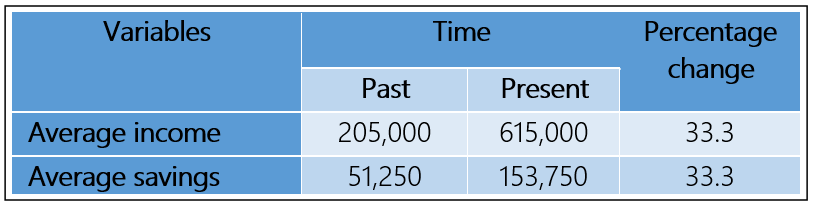
Table 5: Changes in Financial Capital
Meyabeme et al. (2021) offered an alternative perspective in their study on the analysis of the actors involved in the bamboo value chain and plans for the development of the bamboo sector in the Menoua Division, West Region of Cameroon. According to Meyabeme et al. (2021), their research revealed two primary categories of actors: direct actors, which included collectors, collectors/transporters, producers/collectors, producers/collectors/transporters, and collectors/traders; and indirect actors, which included municipal councils, the Ministry of Forestry and Wildlife’s Decentralized Services (MINFOF), development partners like INBAR, research institutions like the Institute of Agricultural Research for Development (IRAD), and academic institutions like the University of Dschang. While the indirect actors are those that offer financial and technical support (Municipal Councils, INBAR; IRAD, the University of Dschang) or whose actions impact the sector (e.g., MINFOF), the direct actors are directly connected to the bamboo value chain (Meyabeme et al., 2021).
According to research on the anticipated mean monthly revenue generated by rattan production as a means of subsistence, processors are paid significantly more each month than any other group involved in rattan production. The little value addition on rattan raw materials, such as sorting, cleaning, and drying, is the reason for the relatively high monthly average income of about 75,000 FCFA. The results are different from those of a study on integrated value chain analysis of non-timber forest products: an example of Jharkhand State, India, conducted by Magry et al. (2022). According to their findings, the gross margin analysis revealed that, for Madhuca longifolia (0.29 USD/kg), Tamarindus indica (USD 0.29/kg), and Kerria Lacca (1.84 USD/kg), NTFP collectors received the lowest financial gain, while wholesalers received the largest, followed by small traders (Magry et al., 2022). The study identifies the market structural and governance constraints that NTFP collectors face (Magry et al., 2022). The results also contradict those of Beckline et al. (2022) on forest earnings and rural lives in Southwest Cameroon’s Etinde community forest. According to their findings, 89% of people worked in agriculture, 100% harvested forest resources, and 24% ran other small enterprises.
The findings indicate that, with 30.1% of actors, rattan transformation is a significant livelihood option for artists and craftsmen. The results are different from those of Effah et al. (2014), who studied the viewpoints of producers in small and medium-sized bamboo and rattan businesses in Kumasi’s economic empowerment. According to their findings, SMEs that deal with bamboo and rattan have the potential to significantly boost household incomes by providing direct work for artisans (Effah et al. 2014). According to Effah et al. (2014), the study also found that the bamboo and rattan SMEs were middle-income enterprises that produced durable goods. The study concluded that SMEs made of bamboo and rattan are viable in terms of providing jobs and revenue for artisans and their dependents, so rescuing them from the grip of poverty (Effah et al. 2014).
A sizable portion of actors in the Meme Division generate their monthly revenue from rattan transformation as a livelihood strategy, according to the findings on the expected monthly income of actors engaged in this practice. The findings are like those of Chowdhary & Dutta (2021) about the role of rattan cane in livelihood resilience about Nepalese rattan processing businesses and community forest user groups. In terms of livelihood resilience at the community level and job creation at the enterprise level, the study discovered that rattan has been a significant source of revenue to enhance their human capital, natural capital, physical capital, social capital, and financial capital (Chowdhary & Dutta, 2021).
According to the findings of the study on rattan transformation as a means of diversifying one’s source of income, over 46.3% of all participants turn rattan into baskets, furniture, crafts, and designs. These results are consistent with those of Yusoh et al. (2024), who studied non-timber forests as a means of alternative economic survival for the indigenous people of Terengganu, Malaysia: A case study of rattan. The economic worth of rattan, according to the study, is RM34224 annually, with the maximum monthly revenue earned by Orang Asli being RM600 and the lowest being RM70 for each variety of rattan. Rattan is used by the Orang Asli people for many things, such as making tools and equipment, selling it as raw materials, and using it for personal crafts and cultural activities (Yusoh et al., 2024). To fully utilize the potential of rattan and other NTFPs to support the lives and cultural legacy of Orang Asli people, economic, ecological, and cultural factors must be balanced (Yusoh et al., 2024). This study’s findings are different from those of Phimmachanh et al. (2015), who examined the use of bamboo resources as a possible revenue stream to sustain rural lives. They noted that bamboo is widely available, found all over the world, and utilized for a variety of things, including toothpicks, clothing, and building materials. Additionally, they discovered that it is a profitable enterprise that rural residents with the right market value chains and abilities may use to escape poverty (Phimmachanh et al. 2015).
This study examined changes in social, financial, and natural capital across time to document the contributions of rattan production and transformation to livelihoods. The results show that there are fewer social groups now than there were in the past, which has a detrimental effect on the social capital of those who produce and transform rattan as a means of subsistence in the research region. The findings of this study are different from those of a study on the embeddedness of economic acts in the social network: a study of local real entrepreneurship in Cirebon, West Java, carried out by Haryono et al. (2022). Second, there is a vast network between entrepreneurs as well as between entrepreneurs and certain organizations and community structures due to historical construction (Haryono et al., 2022). Third, the variety of ties between social and economic networks is depicted in the map of economic network attachment in social networks (Haryono et al., 2022). The results also diverge from Pratono’s (2020) case study on the rattan sector on cross-cultural cooperation for an inclusive global value chain. By demonstrating the innovative value-adding process that goes beyond the straightforward trade of rattan, the outcome demonstrates the critical role that innovation and technology transfer play in cross-cultural partnership (Pratono, 2020). The social mechanism of cross-cultural cooperation across three global value chain typologies of the rattan sector is identified in this study.
Over the last ten years, the role that rattan production and transformation play in livelihood as a natural capital approach has evolved. There are now 250,266 hectares of forest cover on the surface, which is an 86.37% drop. Biyi-Ayetoso & Jimoh’s (2024) research on the marketing and processing of rattan cane in Ibadan Metropolis is in line with these findings. According to their research, a troubling 36% of respondents are aware that overexploitation and deforestation are to blame for the fall in cane supply. Oteng-Amoako & Obiri-Darko’s (2002) findings on rattan as a sustainable sector in Africa: the necessity of technological interventions is not the same as these findings. According to their research, the industry is endangered by overharvesting, subpar raw rattan stems, inconsistent rattan product quality, and national regulations that seem to stifle the sector and limit the ambitions of traders, weavers, and collectors (Oteng-Amoako & Obiri-Darko, 2002).
Significant changes have also occurred in the ways that rattan production and transformation contribute to livelihood as a means of obtaining financial capital. Compared to their projected average salary of 205,000 FCFA in the past, actors can now claim about 615,000 FCFA, a significant 410,000 FCFA difference. Biyi-Ayetoso & Jimoh (2024) observed that a market margin study reveals different degrees of profitability among rattan items, with chairs showing much higher profitability (32.22%) than others. These results are in line with their findings. The impact of processing expenses, production time, and market demand is highlighted by the individual profit margins for products, such as chairs (145.00%). In the Meme Division, shifts in financial capital serve as potent catalysts that alter the dynamics of the rattan value chain and have an impact on everything from the forest to the market. This is because when actors gain or lose access to financial resources, their propensities to invest in equipment, maintain inventory or stock, adopt new processing techniques, and access premium markets drastically alter. Additionally, the power dynamics amongst value chain participants are impacted by this financial flexibility, which has an impact on everything from harvesting practices to product quality and market accessibility. It also establishes the scale and level of complexity of rattan activities.
Conclusion
At the beginning of this study, rattan production and transformation were investigated as sustainable livelihood solutions in the Meme Division in Southwest Cameroon. According to the study’s analysis, the main players in the rattan value chain as a means of subsistence in the Meme Division of Cameroon’s southwest are harvesters and collectors. Compared to other actors in the rattan value chain, processors earn monthly rates that are relatively higher. This is because the process of sorting, washing, and drying rattan raw materials adds very little value. Rattan transformation, which offers a unique combination of traditional skills and commercial possibilities, has emerged as a crucial sustainable livelihood option. Artists and craftspeople make up the largest group of performers who still convert rattan as a method of making a living. Because it offers a diversification strategy, farmers make up the most varied collection of actors in the rattan value chain. Farmers see rattan production as an alternate source of income, especially when farming is slow during the dry season. Basket weavers, furniture makers, designers, and artisans are the primary players in the metamorphosis of rattan. It was discovered that 43.3% of this group had expanded their manufacturing line into a variety of products, especially in response to actions and market and demand trends that went beyond rattan transformation. Therefore, weaving and crafts are only practiced during times of low agricultural yield. This study considered changes in social, financial, and natural capital across time to capture the benefits of rattan production and transformation to subsistence. The results show that there are fewer social groups now than there were in the past, which has a detrimental effect on the social capital of those who produce and transform rattan as a means of subsistence in the research region. Over the last ten years, the role that rattan production and transformation play in livelihood as a natural capital approach has evolved. There are now 250,266 hectares of forest cover on the surface, which is an 86.37% drop. Significant changes have also occurred in the ways that rattan production and transformation contribute to livelihood as a means of obtaining financial capital. Compared to their projected average salary of 205,000 FCFA in the past, actors can now claim about 615,000 FCFA, a significant 410,000 FCFA difference. To improve the state of their social capital, actors who use the rattan value chain as a means of subsistence should be urged to establish more enduring connections. With the Meme Forest’s size steadily declining, sustainable rattan harvesting and cultivation should be improved to increase natural capital.
References
Akoachere, R. A., & YM, N. (2017). Darcy and apparent velocities of groundwater in phreatic aquiferous formations in Kumba, Cameroon: determined by use of Trigger-tube tracer test method in dug wells. J Hydrogeol Hydrol Eng, 6 (2). DOI: 10.4236/ijmpcero.2017.64033
Beckline, M., Sun, Z., Ntoko, V., Ngwesse, D., Manan, A., Hu, Y., … & Foncha, J. (2022). Rural Livelihoods and Forest Incomes in the Etinde Community Forest of Southwest Cameroon. Open Access Library Journal, 9(7), 1-15.DOI: 10.4236/oalib.1108793
Belcher, B., Ruiz-Pérez, M., & Achdiawan, R. (2018). Global patterns and trends in the use and management of commercial NTFPs: implications for livelihoods and conservation. World Development, 66, 1-14.
Biyi-Ayetoso, W., & Jimoh, S. (2024). Processing and marketing of rattan cane in Ibadan Metropolis. doi: 10.20944/preprints202401. 0609.v1
Caspa, R. G., Myambi, G. N., Amang, M. J., Mabe, M. N., Nwegueh, A. B., & Foahom, B. (2020). Socio-economic benefits of non-timber forest products to the AFCOE2M communities of Southern Cameroon. Sustainable Agriculture Research, 9(3), 30-38. doi:10.5539/sar.v9n3p30
Chenaa, T. A., Maria, A. G., & Teno, M. N. (2018). Determinants of access to credit and performance of smallholder farmers in Kumba Municipality, Southwest Region of Cameroon. Asian Journal of Agricultural Extension, Economics & Sociology, 25(1), 1-12. DOI: 10.9734/AJAEES/2018/40448
Chowdhary, C. L., & Dutta, I. C. (2021). Contribution of rattan cane in livelihood resilience in relation to Community Forest User Groups and Rattan Processing Enterprises in Nepal. Nepal Journal of Multidisciplinary Research, 4(3), 1-23.DOI:10.3126/njmr.v4i3.42807
Corral, P., Irwin, A., Krishnan, N., Mahler, D. G., & Vishwanath, T. (2020). Fragility and conflict: On the front lines of the fight against poverty. World Bank Publications.
Cramb, R.A., Colfer, C.J.P., Dressler, W. et al. Swidden Transformations and Rural Livelihoods in Southeast Asia. Hum Ecol 37, 323–346 (2009). https://doi.org/10.1007/s10745-009-9241-6
Derebe, B., Alemu, A., & Asfaw, Z. (2023). Contribution of non-timber forest products earns livelihood in rural households and the type of use: a systematic review. International Journal of Forestry Research, 2023(1), 9643290. https://doi.org/10.1155/2023/9643290
Effah, B., Boampong, E., Asibey, O., Pongo, N. A., & Nkrumah, A. (2014). Small and medium bamboo and rattan enterprises in economic empowerment in Kumasi: perspectives of producers. Journal of Social Economics, 1(1), 11-21. https://ideas.repec.org/a/rss/jnljse/v1i1p2.html
Endamana, D., Shepherd, G., Akwah Neba, G., Angu Angu, K., Ntumwel Bonito, C., & Eyong Ako, C. (2019). Rapid assessment of the value of forest income for people in Central Africa. Journal of Sustainable Forestry, 38(4), 343-368. https://doi.org/10.1080/10549811.2018.1549499
Epule, E. T., & Bryant, C. R. (2016). Assessing the effects of agroecology and conventional farming techniques on small-scale peasant farmers’ crop yields in the Fako and Meme divisions of Cameroon. African journal of agricultural research, 11(10), 849-866. https://doi.org/10.5897/AJAR2015.10498
FAO, (2020). Global forest resources assessment 2020: main report (Rome) (https://doi.org/10.4060/ca9825en)
Frederick Mbufor, E., Azibo Balgah, R., & Ngek Shillie, P. (2023). Determinants of adoption of certified cocoa production in Meme Division, Southwest Region of Cameroon. International Journal of Agriculture and Environmental Research, 9(2), 96-117. DOI: 10.22004/ag.econ.334596
Frost, N. (2021). Qualitative research methods in psychology: Combining core approaches 2e. McGraw-Hill Education (UK).
Gibbs, M. (2018). What Are Tropical Rainforests? Britannica Educational Publishing.
Gonmadje, C., Kaam, R., Trinh Tl, E. E., & Brian, C. (2018). Biophysical assessment of rattan in Cameroon. INBAR Workingpaper.
Harbi, J., Erbaugh, J. T., Sidiq, M., Haasler, B., & Nurrochmat, D. R. (2018). Making a bridge between livelihoods and forest conservation: Lessons from non-timber forest products’ utilization in South Sumatera, Indonesia. Forest policy and economics, 94, 1-10. https://doi.org/10.1016/j.forpol.2018.05.011
Haryono, H., Mukhtar, M., Sumarti, T., Damanhuri, D. S., & Sjaf, S. (2022). Embeddedness of Economic Actions in the Social Network: Study among of Local Genuine Entrepreneurship in Cirebon, West Java. JSW (Jurnal Sosiologi Walisongo), 6(1), 29-42.
Jaisankar, I., Subramani, T., Velmurugan, A., & Singh, A. K. (2017). Genetic diversity revealed among rattan genotypes from Andaman and Nicobar Islands based on RAPD and ISSR markers. Forest Res Eng Int J, 1(2), 45-50.DOI: 10.15406/freij.2017.01.00007
Joshi, M., Charles, B., Ravikanth, G., & Aravind, N. A. (2017). Assigning conservation value and identifying hotspots of endemic rattan diversity in the Western Ghats, India. Plant Diversity,39(5),263-272.https://doi.org/10.1016/j.pld.2017.08.002
Khan, N., Naushad, M., Faisal, S., & Fahad, S. (2020). Analysis of poverty in different countries of the world. Available at SSRN 3701329.
Kimengsi, J. N., & Tosam, J. N. (2013). Climate variability and cocoa production in Meme Division of Cameroon: Agricultural development policy options. Greener Journal of Agricultural Sciences, 3(8), 606-617. DOI: 10.15580/GJAS.2013.8.022713505
Kurian, A., Dev, S. A., Sreekumar, V. B., & Muralidharan, E. M. (2020). The low-copy nuclear region, RPB2 is a novel DNA barcode region for species identification in the rattan genus Calamus (Arecaceae). Physiology and Molecular Biology of Plants, 26, 1875-1887.
Kurian, A., Dev, S. A., VB, S., & EM, M. (2018). Limitations of the Recommended DNA
Magry, M. A., Cahill, D., Rookes, J., & Narula, S. A. (2022). An integrated value chain analysis of non-timber forest products: A case of Jharkhand state of India. Small-scale Forestry, 21(4), 621-645. https://doi.org/10.1007/s11842-022-09520-0
Mama, Y.M., Ndjock, G.A.B., Amoa, P.P. et al. Improving the surface treatment of Mannii rattan fibres for the reinforcement of composite materials using Weibull analysis. MRS Advances (2024). https://doi.org/10.1557/s43580-024-00963-5
Mateko-Odikro Mate, M. (2021). Processing and utilization of selected local plant fibres for macramé (Doctoral dissertation).
Mbella, M. F., & Fonjong, L. (2018). Challenges to effective rural-urban linkages in meme division of Cameroon. Journal of Asian Scientific Research, 8(2), 42.DOI:10.18488/journal.2.2018.82.42.51
Meijaard, E., Achdiawan, R., Wan, M., & Taber, A. (2014). Rattan: The decline of a once-important non-timber forest product in Indonesia, (Vol.101). CIFOR. http://dx.doi.org/10.17528/cifor/004484
Meyabeme, A., Kaam, R., Eba, N. M. F., Awazi, N. P., Zanguim, H., Nfornkah, B. N., & Tchamba, M. N. (2021). Analysis of Actors Involved in the Bamboo Value Chain and Strategies for the Development of the Bamboo Sector in the Menoua Division, West Region of Cameroon. Open Journal of Forestry, 12(1), 122-141.DOI: 10.4236/ojf.2022.121007
Mofor G., Z., Nadine Y., T., & Ndamsa D., T. (2020). Problematic of Rattan Resource Management: Conservation and Post-Harvest Concerns in Bamenda Town and Its Environs. Journal of Geography, Environment and Earth Science International 24(4): 80-92, 2020; Article no. JGEESI.57757 ISSN: 2454-7352
Ndah, N. R., Ekole, P. N., Agwa, M. H., Taku, J., Lucha, C. F. B., & Agbor, D. T. (2023). Crop diversification and sustainability in a cocoa agroforestry system in Meme Division Southwest Region, Cameroon. Asian Journal of Research in Agriculture and Forestry, 9(2), 1-15.DOI: 10.9734/AJRAF/2023/v9i2196
Nfornkah, B. N., Enongene, K., Kaam, R., Djomo, C., Forje, G. W., Awazi, N. P., & Delanor, T. A. (2022). Spatial distribution of rattan and indigenous perspectives vis-à-vis the growth rate of economically important rattan species in Cameroon: Sustainability and policy implications. Current Research in Environmental Sustainability, 4, 100151.https://doi.org/10.1016/j.crsust.2022.100151
Nfornkah, B. N., Enongene, K., Kaam, R., Tanougong, A. D., Djomo, C., Forje, W. G., & Nyong, P. A. (2021). Growth potential and sustainability of economically important rattan species in agroecological zones of Cameroon. INBAR Working Paper.
Nzengue, E., Iponga, D. M., Mickolo, C., & Mouyebissi, H. P. (2023). Ecological diversity, structure and exploitation of rattan stand according to a disturbance gradient around the Nkoltang forest, Estuary province of Gabon. Qeios. https://doi.org/10.32388/N7OJNL
Oteng-Amoako, A., & Obiri-Darko, B. (2002). Rattan as sustainable industry in Africa: the need for technological interventions. Sida, 89. https://www.fao.org/4/Y2783E/y2783e10.html
Phimmachanh, S., Ying, Z., & Beckline, M. (2015). Bamboo resources utilization: A potential source of income to support rural livelihoods. Applied Ecology and Environmental Sciences, 3(6), 176-183.DOI:10.12691/aees-3-6-3
Pratono, A. H. (2020). Cross-cultural collaboration for inclusive global value chain: a case study of rattan industry. International Journal of Emerging Markets, 15(1), 149-170.
Shackleton, C. M., & de Vos, A. (2022). How many people globally actually use non-timber forest products? Forest Policy and Economics, 135, 102659.
Shanley, P., Pierce, A. R., Laird, S. A., Binnqüist, C. L., & Guariguata, M. R. (2015). From lifelines to livelihoods: Non-timber forest products into the twenty-first century. Tropical Forestry Handbook, 1-50. DOI 10.1007/978-3-642-41554-8_2091
Shiva, V. (2018). Development, ecology, and women. In Living with contradictions (pp. 658-666). Routledge.
Siregar, H., Belcher, B., & Achdiawan, R. (2017). The role of culture in shaping actors’ responses to forest policy: insights from Indonesia. Ecology and Society, 22(3), 11.
Sunderland, T. C. (2001). Rattan resources and use in West and Central Africa.
Sunderland, T., & Noordwijk, M. V. (2014). Opportunities for Agroforestry in REDD+ Landscapes: A Case Study from Cameroon. Forests, 5(8), 1702-1720.
Wahab, R., Mokhtar, N., Mohd Ghani, R. S., & Sulaiman, M. S. (2019). An overview of rattan industry status and its economic aspect in setting up rattan-based industry in Malaysia. e-BANGI Journal, 16(3).
Widess, J., & Miller, B. W. (2024). The Caner’s Handbook: Restoring Cane, Rush, Splint, Danish Cord, Rawhide, and Wicker Furniture. Schiffer+ ORM.
Wicaksono, A., Kusumawati, R., & Prasetyo, L. B. (2018). Enhancing multi-stakeholder collaboration for sustainable rattan value chain governance in Indonesia. Forest Policy and Economics, 96, 1-8.
Wong, J. (2009). Rattan: Current status and future prospects. Rome: Food and Agriculture Organization of the United Nations.
World Bank. (2024). Poverty overview: Development news, research, data. World Bank. https://www.worldbank.org/en/topic/poverty/overview
Yusoh, M. P., Abdullah, M. F., Suratman, M. N., Roslan, M. N. H., & Ahmad, B. E. (2024). Non-timber forest as an alternative economic survival for indigenous community in Terengganu, Malaysia: A case study of rattan. Planning Malaysia, 22. DOI: https://doi.org/10.21837/pm.v22i34.1603
To cite this article
Electronic reference
Adolf Metta Bekumba, Josephine Akenji Maghah, William Shu Neba& Jude Ndzifon Kimengsi (2025). « Rattan value chain and livelihood dynamics in rural Cameroon: case study of Meme Division, South West Region, Cameroon ». Canadian journal of tropical geography/Revue canadienne de géographie tropicale [Online], Vol. (10) 1. Online Novemer 9, 2025, pp. 1-9. URL: https://revuecangeotrop.ca
Authors
Adolf Metta Bekumba
Department of Geography and Planning
The University of Bamenda, Cameroon
Email: bekumbaadolf2@gmail.com
Josephine Akenji Maghah
Department of Geography and Planning
The University of Bamenda, Cameroon
Email: akenjitulis@gmail.com
William Shu Neba
University of Fort Hare, Eastern Cape
Alice Campus, 5700, South Africa
Email: shuwlly@yahoo.com
Jude N. Kimengsi
Forest institutions and International Development (FIID) Research Group, Faculty of Environmental Sciences, Technische Universität Dresden, Germany.
Department of Geography, HTTC, The University of Bamenda
Email: jude.kimengsi@catuc.org
